Table of Contents
Features of the EPA Gasoline Powered Engine Travel Speed 4Km Tracked Wireless Radio Control Brush Mulcher

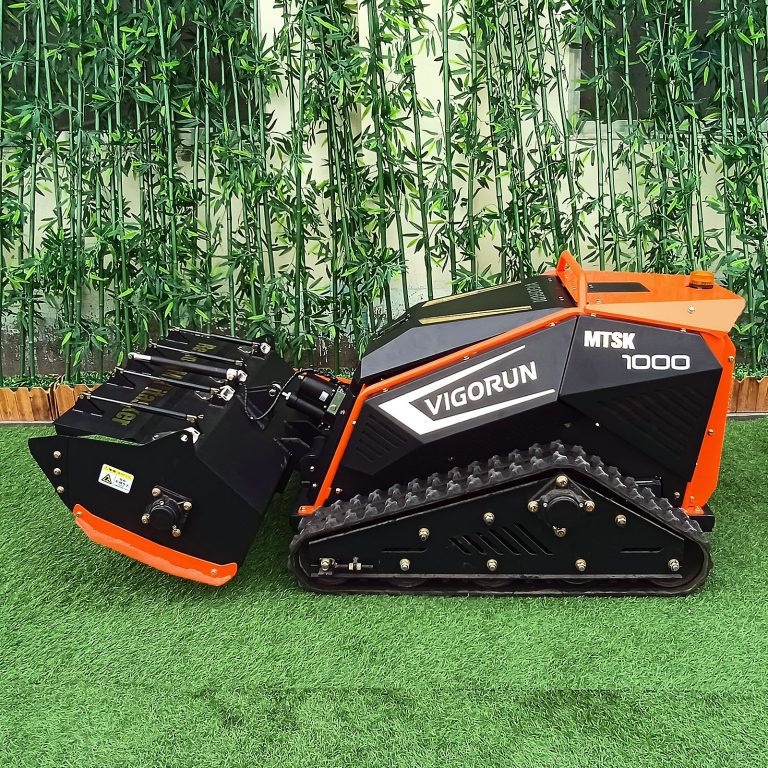
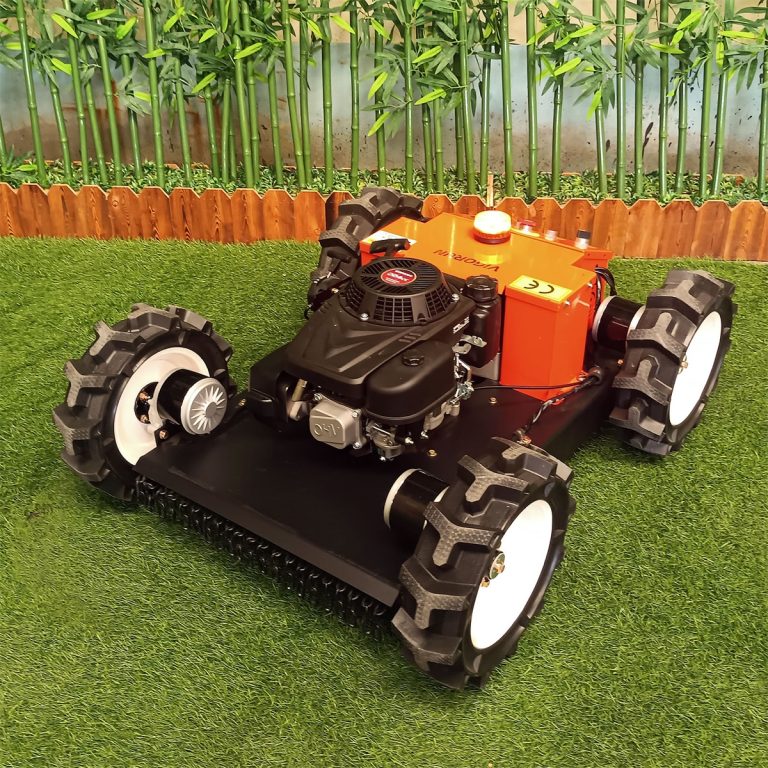
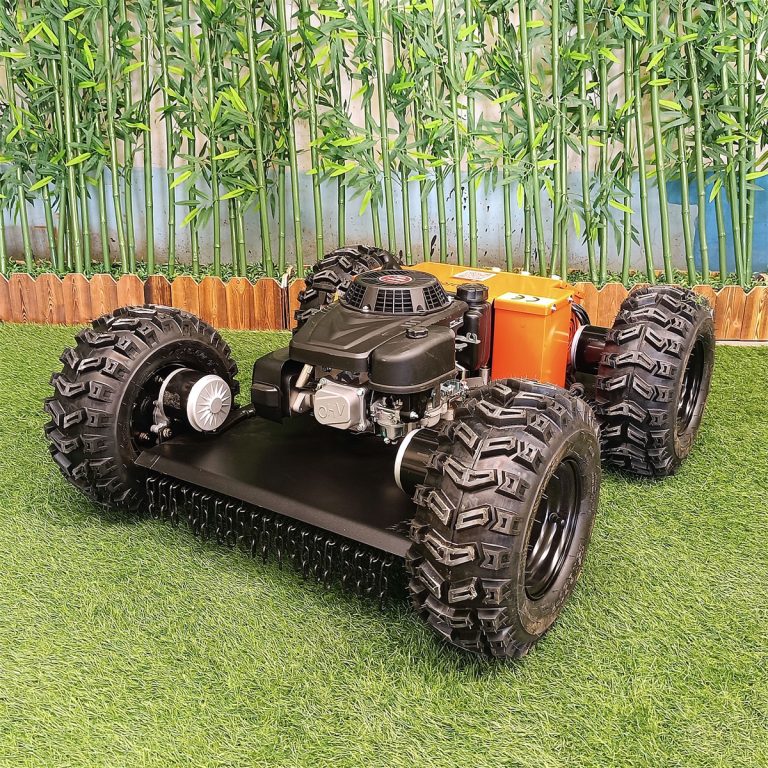
 The EPA gasoline powered engine travel speed 4Km tracked wireless radio control brush mulcher is a sophisticated piece of equipment designed for efficiency and versatility. This machine is equipped with a powerful V-type twin-cylinder gasoline engine, specifically the Loncin brand model LC2V80FD. With a rated power of 18 kW at 3600 rpm, it delivers robust performance that meets the demands of various landscaping tasks.
The 764cc gasoline engine not only provides significant output power but also features a clutch system that engages only when it reaches a predetermined rotation speed. This ensures optimal performance while protecting the engine from unnecessary wear during operation. The thoughtful engineering behind this machine allows operators to tackle challenging jobs with confidence and ease.
The EPA gasoline powered engine travel speed 4Km tracked wireless radio control brush mulcher is a sophisticated piece of equipment designed for efficiency and versatility. This machine is equipped with a powerful V-type twin-cylinder gasoline engine, specifically the Loncin brand model LC2V80FD. With a rated power of 18 kW at 3600 rpm, it delivers robust performance that meets the demands of various landscaping tasks.
The 764cc gasoline engine not only provides significant output power but also features a clutch system that engages only when it reaches a predetermined rotation speed. This ensures optimal performance while protecting the engine from unnecessary wear during operation. The thoughtful engineering behind this machine allows operators to tackle challenging jobs with confidence and ease.
 Moreover, the brush mulcher is designed to enhance safety and usability. It incorporates a built-in self-locking function, which guarantees that the machine remains stationary until both power is on and throttle is applied. This feature effectively prevents unintended sliding, significantly improving operational safety and allowing operators to focus on their tasks without worry.
Versatility and Performance of the Brush Mulcher
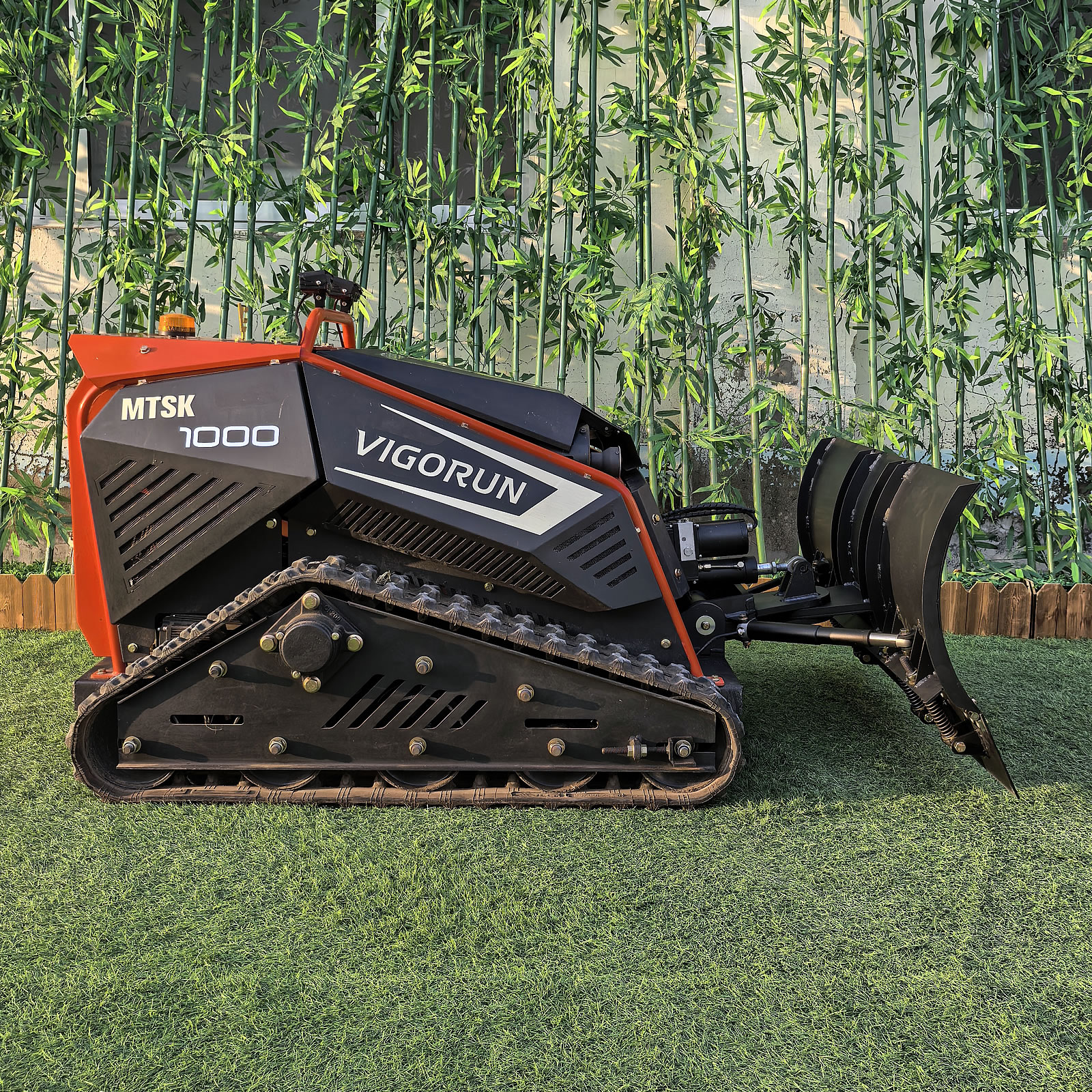
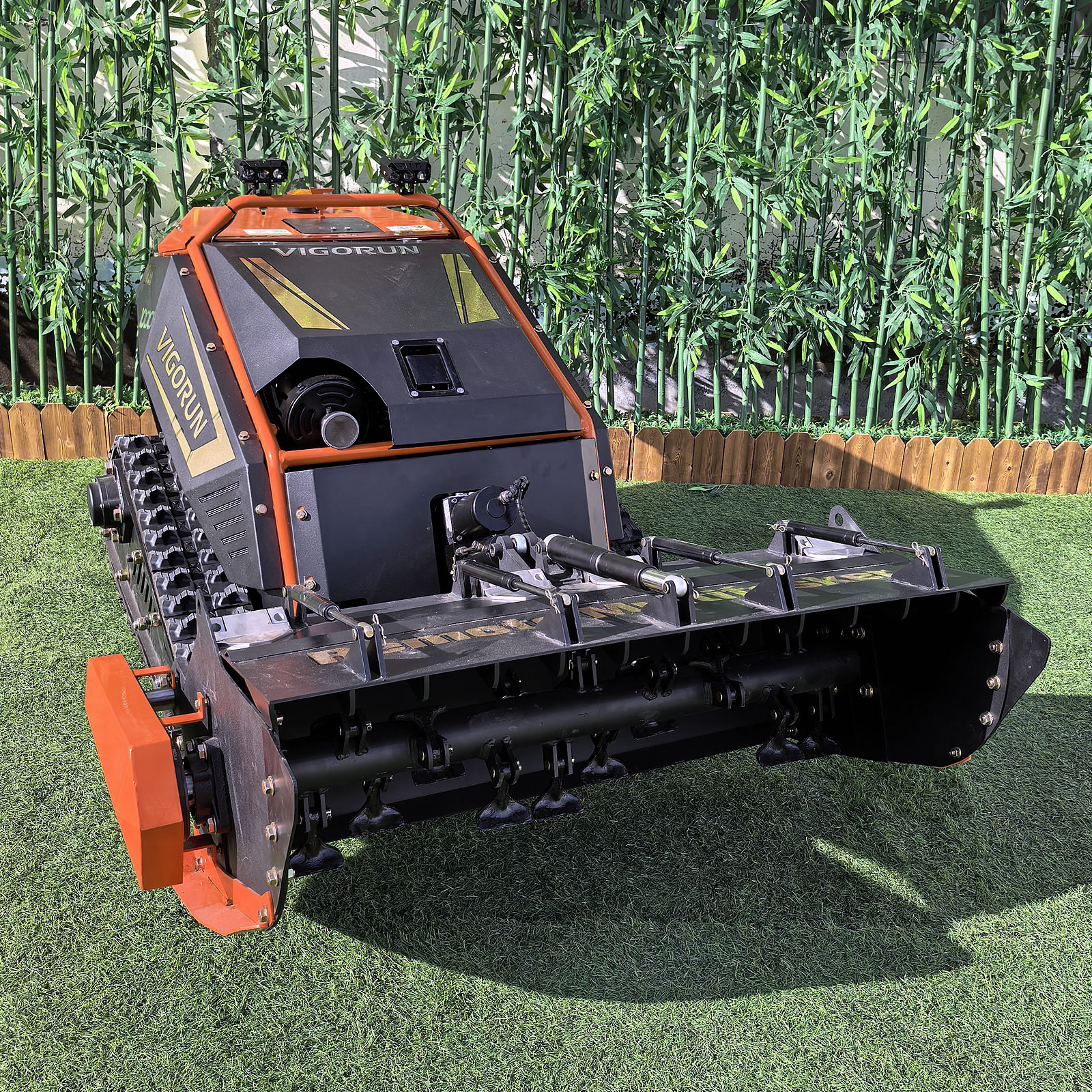
The EPA gasoline powered engine travel speed 4Km tracked wireless radio control brush mulcher stands out due to its multifunctionality. It boasts interchangeable front attachments, making it an ideal choice for various applications. Whether you need a 1000mm-wide flail mower, hammer flail, forest mulcher, angle snow plow, or snow brush, this machine can adapt to your needs, providing outstanding performance in demanding conditions. Equipped with two 48V 1500W servo motors, the brush mulcher offers impressive climbing capabilities and operational power. The intelligent servo controller regulates motor speed while synchronizing the left and right tracks, enabling the machine to travel straight without constant adjustments. This innovation reduces the operator’s workload and minimizes risks associated with over-correction, especially on steep slopes.